.webp)

Phase 3 (enrollment complete) · Open-label extension (accepting patients)
The pivotal Phase 3 study (NCT06709014), which began in February 2025, is evaluating a once-daily 30 mg dose of buntanetap in treating early AD. The double-blind study assesses symptomatic effects at 6 months and potential disease-modifying effects at 18 months in patients aged 55–85 who are plasma pTau217-positive with MMSE scores of 20–28.
An open-label extension study (NCT07757204), which began in October 2026, will offer buntanetap to participants who complete the pivotal study and to participants from prior Annovis AD trials.
Phase 3 (completed) · Open-label extension (accepting patients)
A total of 471 patients completed the Phase 3 study of buntanetap in early PD (NCT05357989). Buntanetap showed clinically meaningful improvements across MDS-UPDRS Parts II, III, IV and total scores, both in the per-protocol population and in patients with postural instability and gait difficulty (PIGD). Patients on placebo experienced worsening of cognition (MMSE) over six months, while those treated with buntanetap showed no decline.
An open-label extension study (NCT07284784), which began in January 2026, is examining the long-term safety of buntanetap over 36 months, including people who took part in prior buntanetap trials (by invitation) and people with Parkinson's receiving deep brain stimulation (DBS).
Phase 3-ready
A study of buntanetap in Parkinson's disease dementia is currently in preparation. The study design and endpoints are being finalized with input from key opinion leaders and regulatory agencies. Updates will be provided as the program advances.
Click an indication to see program details. Buntanetap, ANVS 405 and ANVS 301 are investigational drugs and have not been approved by the FDA or any other regulatory authority. Trulicity® is a registered trademark of Eli Lilly and Company; Viagra is a registered trademark of Pfizer Inc.
UNIFIED COGNITIVE RESPONSE:
BUNTANETAP SHOWS THE STRONGEST BENEFIT IN AMYLOID/TAU-POSITIVE PATIENTS WITH MMSE >20




ALZHEIMER'S STUDIES
Pivotal Phase 3 Study - active
A Double-blind Dual Study Assessing Safety and Efficacy of Buntanetap in Participants with Early AD
Study goal: To determine whether a daily dose (30mg) of buntanetap is effective in treating early AD
Duration: 6-month (symptomatic) & 18-month (disease-modifying)
Key inclusion criteria: Adults aged 55-85, plasma pTau217-positive, MMSE 21-28
Total enrollment: 850 patients
Clinical sites: 78
More information can be found in Patient Portal or at clinicaltrials.gov.
Phase 2 Study - completed
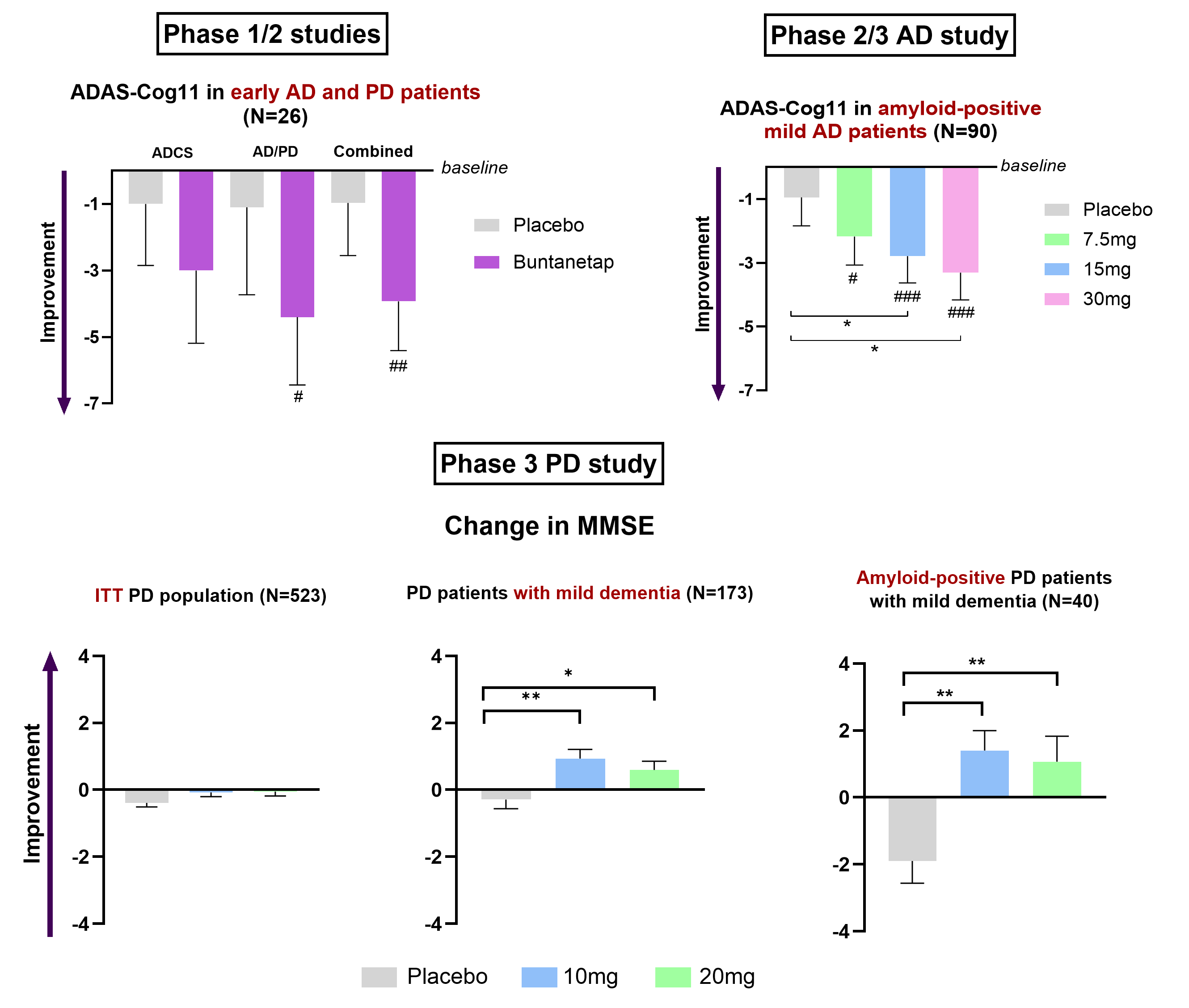
The study was completed with 345 patients, of which 90 were identified as having mild AD (MMSE 21-24). These 90 AD patients showed dose-dependent, statistically significant improvements from placebo in the two higher concentrations (15mg, p=0.042; 30mg, p=0.015) and all doses showed significant improvement over baseline (7.5mg, p= 0.013; 15mg p=0.001; 30mg p<0.001).
The data further showed that APOE4 carriers respond well to the drug improving by 3 - 4 points in ADAS-Cog11, similar to the response seen in non-carriers.
Improved cognition in mild AD patients (a) and, specifically, in APOE4 carriers (b)

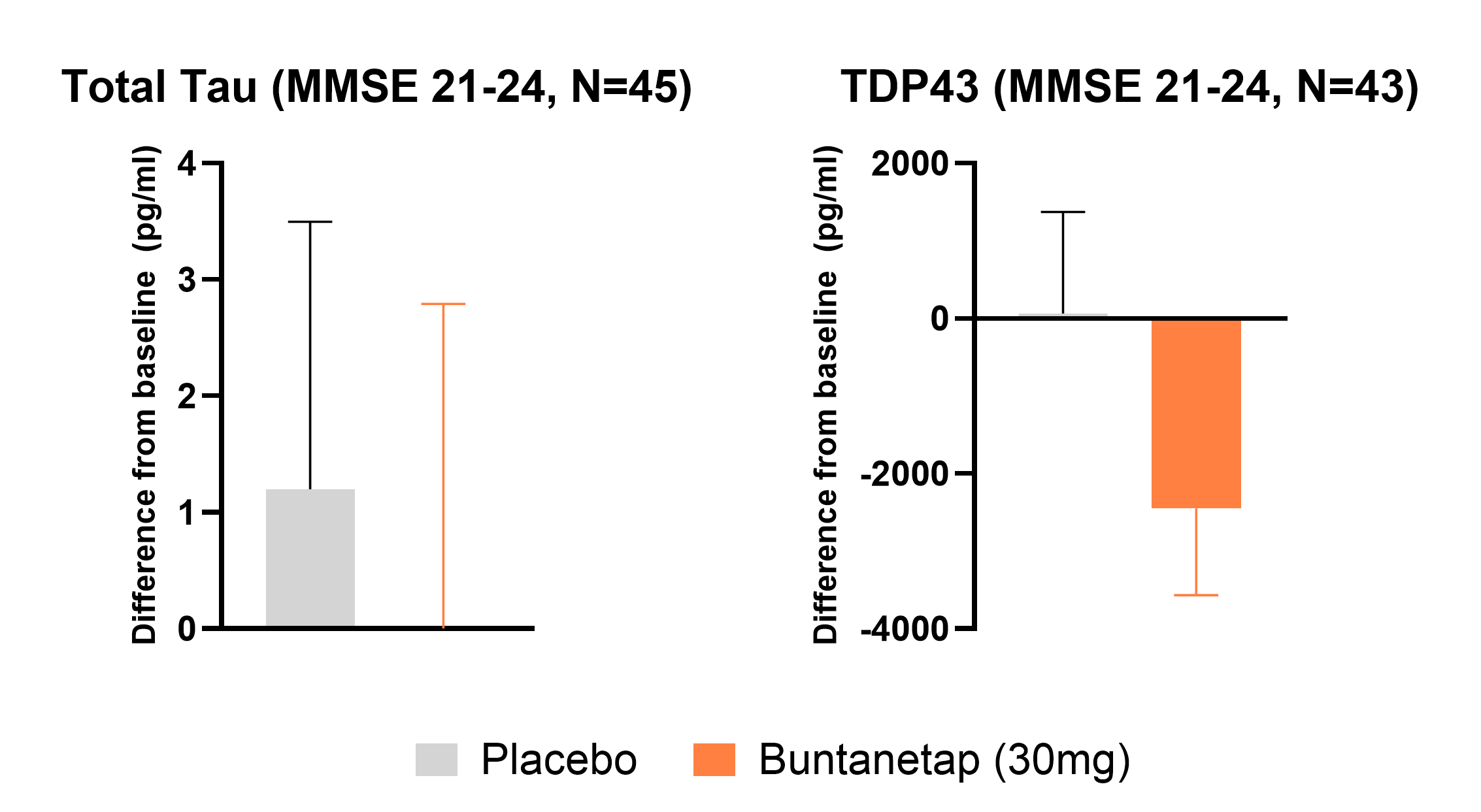
Neurotoxic proteins
For additional information see – News Releases
PARKINSON'S STUDIES
Open-Label Extension (OLE) Study - recruiting
A Study of Buntanetap in Participants With PD
Study goal: To examine ong-term safety of buntanetap in participants with PD
Duration: 36 months
Key inclusion criteria: Cohort 1 enrolls via invitation only PD participants who have previously participated in buntanetap clinical trials. Cohort 2 enrolls PD participants who are receiving deep brain stimulation (DBS) treatment.
Estimated enrollment: 500 patients
Clinical sites: 25
More information can be found in Patient Portal or at clinicaltrials.gov.
Phase 3 Study - completed
A total of 471 patients completed our Phase 3 study in early Parkinson’s disease.
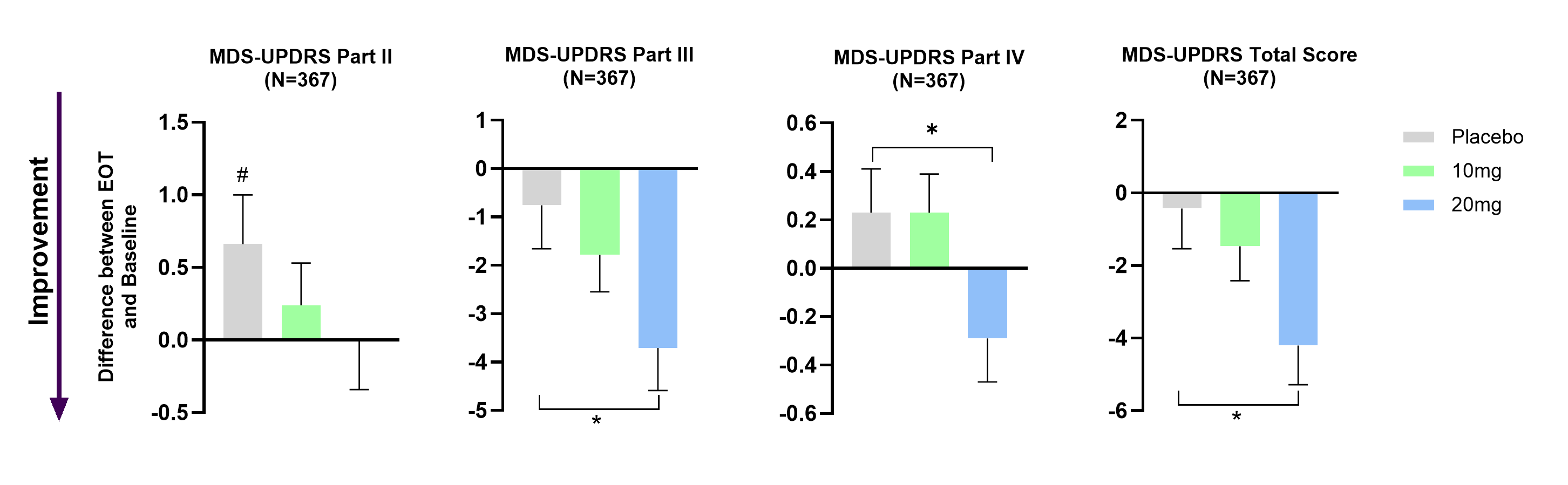
Buntanetap demonstrated clinically meaningful improvements across all key MDS-UPDRS measures (Parts II, III, IV, and Total scores) both in the Per-Protocol-Population and in patients with Postural Instability and Gait Difficulties (PIGD).
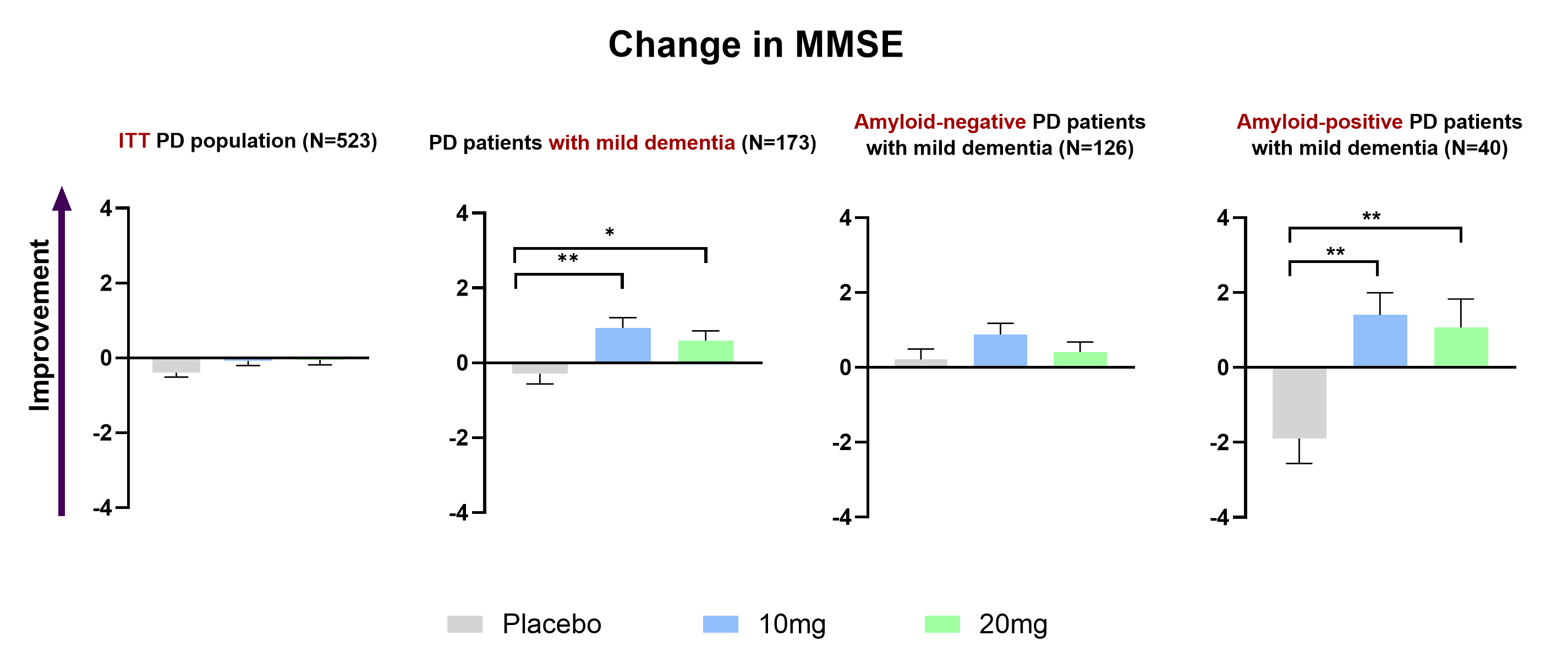
Importantly, buntanetap halted cognitive decline.
While patients on placebo experienced worsening of cognition (MMSE) over six months, those treated with buntanetap showed no decline.
The strongest cognitive benefits were seen in patients at higher risk for decline.
In individuals with mild dementia (MMSE >20) who were also positive for amyloid and tau, buntanetap produced the most pronounced cognitive improvements.
Per-Protocol-Population
Phase 2a Studies - completed
Two Phase 2a studies in AD patients demonstrated an improvement in cognitive functions over baseline after 20-28 days of treatment with buntanetap.
In the Phase 2a Discover study, 60mg of buntanetap given for 20 days showed a strong trend in improving ADAS-Cog11 score, while in Phase 2a AD/PD study, 80mg buntanetap given over 25 days showed clinically significant improvement (p=0.04) in ADAS-Cog11 by 4.4 points from baseline and 3.3 points over placebo (MMSE 18-28).
Improved cognition (a) and speed/accuracy (b) in Alzheimer's

Data from 14 AD patients showed that ADAS-Cog11 improved by 4.4 points from baseline in the buntanetap-treated group, a statistically significant improvement of 30% (p<0.05). At 25 days, the treated group was also 3.3 points better than the placebo. The WAIS coding, which measured speed in movement and thinking, showed a statistically significant 23% improvement in AD patients treated with buntanetap compared to baseline.
Improved movement (a) and speed/accuracy (b) in Parkinson's

All buntanetap treatment groups combined showed statistically significant improvement in the MDS-UPDRS Part III and WAIS coding test. In this study, patients receiving 10mg and 20mg of buntanetap were the best performing groups. (* p<0.05; ** p<0.01; *** p<0.001).
Publication: Fang et al., 2022
.svg)


.svg)
.svg)
.svg)
